Disclaimer: This is general advice for static caravan buyers. Some details may not apply to our park, so please check with our team before making any decisions.
You've found the park. The lake. The peace.
You can already picture slow weekends in Shropshire — mornings by the water, evenings on the decking.
Then comes the practical bit: what does it actually cost to own and run each year?
Annual pitch fees (often called annual site fees) can feel confusing because every park bundles things differently — and "headline" figures don't always tell the full story.
This guide gives you realistic ranges, plain-English explanations, and the exact questions to ask — so you can budget properly and avoid surprise costs.
Ads by Salop Caravan Sites
Scroll to continue with content
Answer summary (Shropshire, 2026)
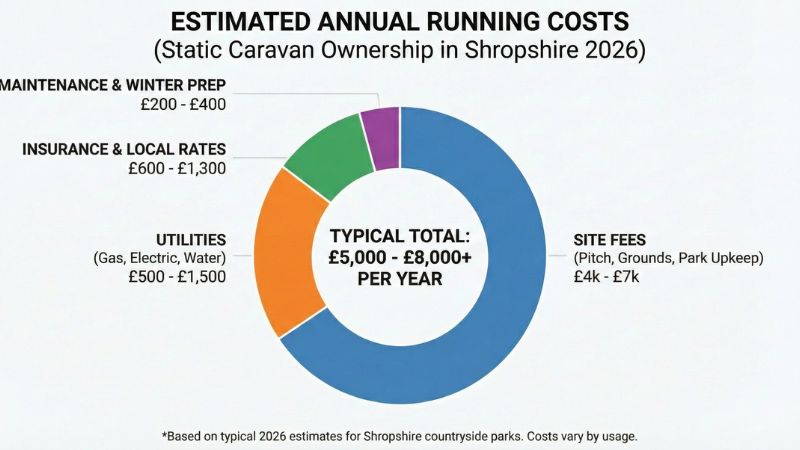
- Typical total yearly running cost: £5,000–£8,000 for many owners (pitch fee + bills)
- Typical annual pitch fees: £3,600–£7,000+ per year, depending on park and pitch
- Typical other costs: £1,200–£2,000 per year (utilities, insurance, checks, winterisation)
- Council tax: not payable for holiday-use caravans/lodges on holiday parks; rates may be included or listed within park charges
- Holiday use: you must keep a separate main residence (parks will ask for proof)
Terminology: "Annual pitch fee" here means the yearly ownership fee to keep your static caravan or lodge on its pitch (sometimes called an annual site fee) — not touring pitch prices or nightly stays.
Note: Use these ranges to budget, then confirm the exact costs for the specific pitch you want in writing.
What this guide covers
- What annual pitch fees usually include — and what's extra
- Typical 2026 Shropshire ranges and a simple way to estimate total yearly running costs
- Optional/seasonal charges (and how to avoid bill shock)
- Key risks: fee increases, licence terms, resale and exit costs
- A no-surprises checklist you can use on any park
Related guides for deeper research:
- How much does a static caravan holiday home cost in Shropshire?
- Guide to choosing the right static caravan park in Shropshire
How to budget (simple 3-line model)
Use this on any park:
- Annual pitch fee (park + pitch)
- Other costs (utilities + insurance + checks + winterisation)
- Optional extras (WiFi, decking care, repairs buffer, hot tub running costs if you add one)
Total annual running cost = 1 + 2 + 3.
Where these figures come from: the ranges below reflect typical countryside holiday park pricing in Shropshire and common owner bills. Budget first, then confirm the exact numbers for your pitch and park.

Typical annual pitch fees in Shropshire (2026)
Across Shropshire, annual pitch fees for static caravan and lodge ownership often sit around £3,600–£7,000+ per year, depending on location, pitch type, facilities, and whether the park is owners-only.
When you add day-to-day ownership bills, many buyers plan for a typical all-in running cost of £5,000–£8,000 per year (some less, some more).
Annual cost snapshot (budgeting examples)
Countryside pitch (budget)
Annual pitch fee: £3,600–£4,800
Other costs: £1,200–£1,700
Total / year: £4,800–£6,500
Owners-only countryside park
Annual pitch fee: £4,000–£5,500
Other costs: £1,300–£1,800
Total / year: £5,300–£7,300
Premium lakeside / high demand
Annual pitch fee: £5,500–£7,000+
Other costs: £1,500–£2,000
Total / year: £7,000–£9,000+
These are budgeting ranges, not quotes. Your final cost depends on pitch choice, season length, what's included, and how often you use your holiday home.
Quick value check:
Example: £5,000 annual spend over 70 nights works out at about £71 per night.
Spring Lea published park fees
Spring Lea publishes its current park fees. Use those as your most reliable baseline, then ask the team to confirm the figure for your exact pitch for 2026.
- Single pitch (static caravan): £3,762 (inc. VAT)
- Double pitch (lodge): £4,377 (inc. VAT)
Spring Lea lists "rates" as included within park fees, and utilities are metered and billed to usage. All pitches include piped gas and wired broadband as standard.
What annual pitch fees usually include (and what they don't)
Often included
- Grounds and landscaping
- Roads, lighting, drainage and bin areas
- Park staff, maintenance and site security
- Shared spaces and walkways
Usually extra
- Electricity and gas (metered) and water (varies by park)
- Insurance (specialist cover)
- Winterisation / drain-down (if required)
- Gas and electrical safety checks
- Broadband/WiFi
- Repairs and emergency call-outs
In plain terms: the pitch fee pays for the park and your plot — your utilities and ownership bills sit on top.
Other yearly costs to budget for (typical ranges)
On top of the annual pitch fee, many owners budget roughly:
- Electricity: £150–£250 (metered)
- Gas: £150–£250 (metered)
- Water: £80–£150 (sometimes included)
- Insurance: £300–£550 (specialist 'New for Old' cover)
- Winterisation / drain-down: £90–£150
- Safety checks: £80–£150 (gas/electrics)
Rule of thumb: £1,200–£2,000 per year on top of your pitch fee is a sensible starting budget for ownership bills.

Do holiday lodges cost more to run?
Often they do — mainly because they're larger and can be used more heavily across cooler months — but it depends on insulation, heating type, and how you use the lodge.
- Pitch fees can be higher if the lodge sits on a larger/double pitch
- Utilities can rise with floor space and winter heating
- Budgeting is the same approach — just add a bit more headroom
Tip: ask the park for a real example of metered electricity/gas usage (or winter bills) for a similar-size lodge on a similar pitch.
Fee increases, licence terms, resale and exit
Most holiday parks review annual pitch fees each year. Increases are commonly tied to inflation, staffing, utilities, and planned improvements.
Ask for these in writing before you commit:
- Next year's pitch fee for the exact pitch you want
- What's included vs what's extra (spelled out)
- Utilities billing method and when you're invoiced
- Fee increase process, notice period, and the last 3–5 years of increases
- Season length (opening/closing dates) and how it affects value
- Resale rules, commission, restrictions, and typical timeframes
- Exit costs: disconnection, moving off, or admin fees
Red flag: if a park won't put key costs and rules in writing, treat that as a warning sign.
No-surprises checklist (screenshot this)
- Park model: owners-only, rentals, or mixed — and how that affects the atmosphere
- Main residence rule: what proof is required and when
- Age rules: any age limits and what happens as the unit gets older
- Maintenance boundaries: what the park covers vs what you pay for
- Resale: commission, restrictions, and typical resale timelines
- Upgrades: decking/skirting/sheds rules and who can do the work
- Guests/pets: limits, parking rules, quiet hours, and any pet restrictions
- Utilities: ask for an example statement if possible
Why pitch fees vary — value vs "cheap"
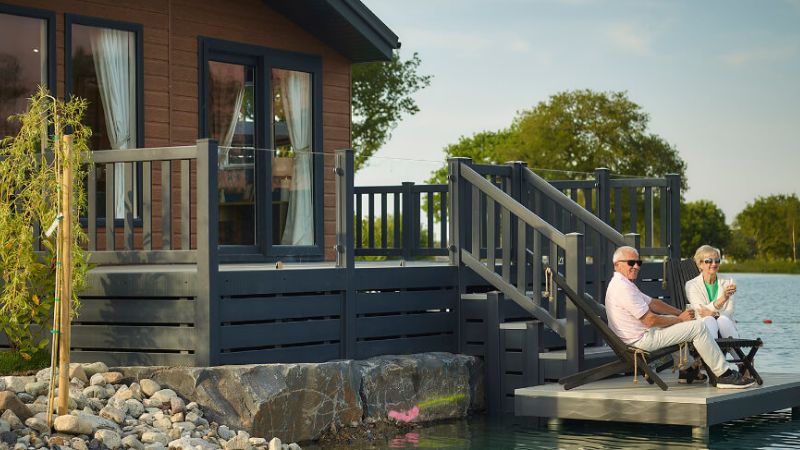
- Pitch position: lakeside, corner, and larger plots often cost more
- Facilities and maintenance standard: more to run usually means higher fees
- Park model: owners-only parks can price differently because they're built around long-term owners
- Location: access to Shrewsbury and the wider Shropshire countryside can influence demand
- Investment level: reinvestment in roads, drainage and landscaping can sit higher — but feel better day to day
Bottom line: the lowest pitch fee isn't always the best ownership experience.
Why choose Salop Caravan Sites?
- Clear pricing with fewer surprises
- Owners-only parks focused on long-term ownership, not rental turnover
- Quiet countryside and lakeside locations
- Supportive, experienced park teams
- Upfront guidance on fees, rules and next steps
Why Buy at Spring Lea?
Spring Lea is a brand-new countryside holiday park and fishery in the heart of Shropshire, designed for owners who want peaceful escapes with exceptional fishing on their doorstep.
- Competitive Fees: Site fees from just £3,762/year (single) or £4,377 (double)
- Fishing Paradise: Four coarse and carp lakes with fish up to 36lbs
- Watersports: Paddleboarding and kayaking on Lake Kingfisher (BYO equipment)
- Hot Tubs Allowed: Subject to park approval — rare among quality parks
- Included Extras: Piped gas and wired broadband as standard on all pitches
- Family Friendly: Children's play area plus enclosed dog walking area
- Easy Access: Just 5 miles from Shrewsbury, convenient for the Midlands
- Family Run: Managed by Martin & Ann Phillips, who live on-site
Want a realistic budget for your plans? Ask for the exact pitch fee, estimated annual bills, and anything charged separately — in writing.
Spring Lea at a Glance
| Location |
Lea Cross, 5 miles from Shrewsbury |
| Postcode |
SY5 8HU |
| Park Managers |
Martin & Ann Phillips |
| Season |
10+ months |
| Site Fees (inc VAT) |
Single £3,762 / Double £4,377 |
| On-Site Facilities |
4 fishing lakes, paddleboarding/kayaking, children's play area, dog exercise area, piped gas, wired broadband, free Wi-Fi |
| Hot Tubs |
Allowed (subject to park approval) |
| Pets |
Welcome, with enclosed dog walking area |
Frequently asked questions
How much are annual pitch fees in Shropshire?
Often £3,600–£7,000+ per year, depending on the park and pitch type.
What do I need to budget beyond the pitch fee?
Many owners budget roughly £1,200–£2,000 per year for utilities, insurance, checks, winterisation, and a small repairs buffer.
Can I live in a static caravan full time?
No — holiday parks are for holiday use, and you'll need to keep a separate main residence. Parks will normally ask for proof before a purchase completes.
Do pitch fees go up every year?
They're typically reviewed annually. Ask to see the last 3–5 years of increases and the notice process.
Do I pay council tax?
No — for holiday-use caravans/lodges on holiday parks, council tax does not apply. Some parks include "rates" within the pitch fee or list it as part of their annual charges, so confirm what applies to your pitch in writing.
Can I sublet my caravan?
Rules vary by park. Spring Lea is owners-only, so confirm the policy before you buy if subletting matters to you.
Can I have a hot tub at Spring Lea?
Yes — hot tubs are permitted on owner pitches, subject to park guidelines.

Disclaimer: This guide is for general information only and reflects typical industry practice as of 2025/2026. While we aim for accuracy, we make no representations or warranties about the completeness, accuracy, or reliability of the information provided, and we accept no liability for any errors or omissions. Costs, policies, licence terms, and facilities vary between parks and manufacturers and may change without notice. Any reliance you place on this information is at your own risk — always confirm details directly with the park manager before making any purchase decision. This content does not constitute financial, legal, or professional advice. If you need specific guidance, please consult a qualified professional.